
Repairing a tank
A tank that weeps from a fitting, a relief valve or a heating element can be put right without a new heater. Water that seeps from the tank wall is a different matter, since that tank cannot be mended.
Tank and tankless water heaters can be repaired, replaced or put in new. Call us, describe the unit and what it is doing, and the plumber who answers gives a free estimate for the work.
First come the choices between repair, replacement and tankless, then the permit and thermal expansion rules that sit on top of the work in Rowlett.
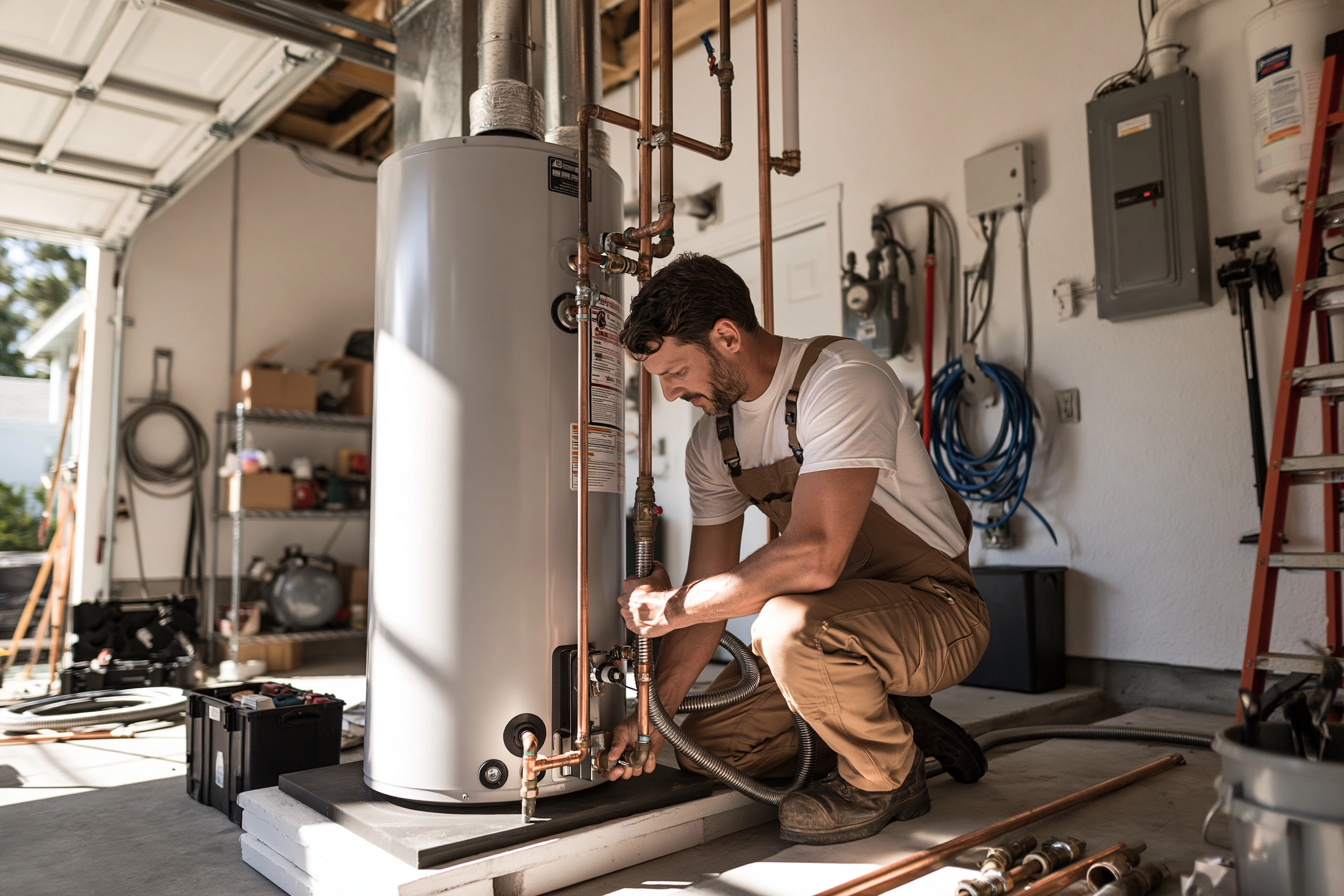
A tank that weeps from a fitting, a relief valve or a heating element can be put right without a new heater. Water that seeps from the tank wall is a different matter, since that tank cannot be mended.
Swapping a tank means draining the old one, lifting it out, setting the new one in its place and reconnecting the water, the vent and the gas or power. If the heater sits above a ceiling, the drain pan and its drain line get a look at the same time.
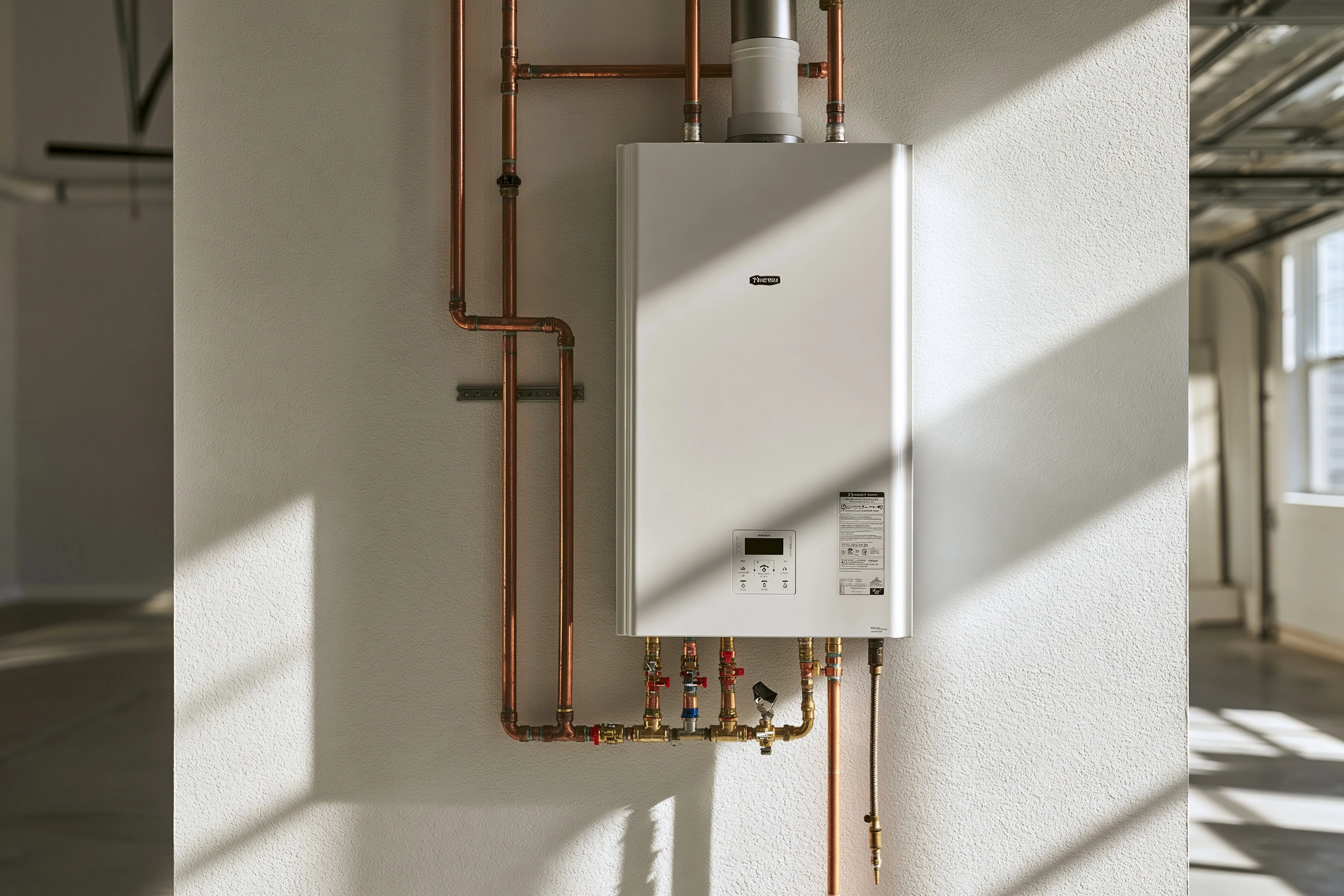
Instead of a stored supply, a tankless unit heats water as it flows, so what matters is gallons per minute and how cold the water arrives. The tankless flow calculator takes Rowlett’s winter weather for that and turns your showers into a unit size.
A tankless unit that has slowed down may be scaled up inside, have a clogged inlet screen or need a part. A plumber checks each before anything is replaced.
The Texas statute behind city permits lists water heaters by name, and its exceptions for leak repairs and for swapped lavatory or kitchen faucets, ballcocks, disposals or toilets leave a new heater outside them. Rowlett’s Building Safety page does not name water heaters separately, and its permit rule for any type of plumbing applies.
Under Texas rules every permit and inspection request on the job comes from the Responsible Master Plumber in charge, and in Rowlett it is filed on the MyGov portal.
Section 70-86 of Rowlett’s code makes whoever owns or controls a property provide for thermal expansion when installing a backflow assembly has created a closed system.
The code names no particular device. A water heater’s expansion tank is one way to make that provision, and it is worth raising with the plumber when a heater is replaced.
Demand sets the size. A tank is picked by what the household uses in its busiest hour, while a tankless unit is picked by the flow it must supply when several outlets run together.
Tank sizing starts with household size and busy-hour uses in the water heater size calculator. Tankless sizing starts with showers, faucets and appliances in the tankless flow calculator, which takes the incoming water temperature from Rowlett’s winter weather.
The build year is coded into the serial number printed on the label. Brand and serial number go into the serial number decoder, which returns a build year and an age to weigh in a decision about another repair.
If the heater turns out to be dry, the wet spot is a pipe, and the leak detection page and the repiping page deal with that, and the home page has the rest of the services.
Call us to discuss your current issue and how we can assist you. The call is free and you get a free, personalized estimate with no obligation. We're here to help.
Call (855) 321-3426